The Artist Who Turned a Road Into a Masterpiece

Updated: Oct 13

Few artists have captured the beauty of everyday life as successfully as Utagawa Hiroshige. Today, he is celebrated as one of Japan's greatest landscape artists, famous for transforming ordinary journeys, changing weather, and quiet moments into unforgettable works of art. His woodblock prints influenced generations of artists around the world and helped shape how people think about Japanese art today. One of his print collections even inspired my cozy mystery, The Three Deaths of Hiroshige. More than 150 years after his death, Hiroshige's work continues to inspire collectors, historians, travelers, and artists alike.
Who Was Utagawa Hiroshige?
Utagawa Hiroshige (1797–1858) was born into a high-level family in Edo, the city now known as Tokyo. He showed artistic talent from an early age and eventually became a student of the renowned Utagawa School, one of the most influential artistic institutions in Japan during the Edo period.
Like many artists of his time, Hiroshige worked in the medium of ukiyo-e, which translates roughly as "pictures of the floating world." Ukiyo-e artists created colorful woodblock prints depicting actors, courtesans, landscapes, and scenes from daily life.
While many of his contemporaries focused on famous personalities and entertainment districts, Hiroshige found his true passion in landscapes. His ability to capture mood, atmosphere, and the changing seasons would make him one of the most beloved artists in Japanese history.
What Was Hiroshige Known For?
Hiroshige is best known for his landscape prints, particularly his depictions of travel routes, rivers, mountains, villages, and city scenes. Unlike many artists who emphasized dramatic action, Hiroshige excelled at portraying quiet moments. These seemingly simple scenes conveyed powerful emotions and created a sense of connection between the viewer and the landscape.

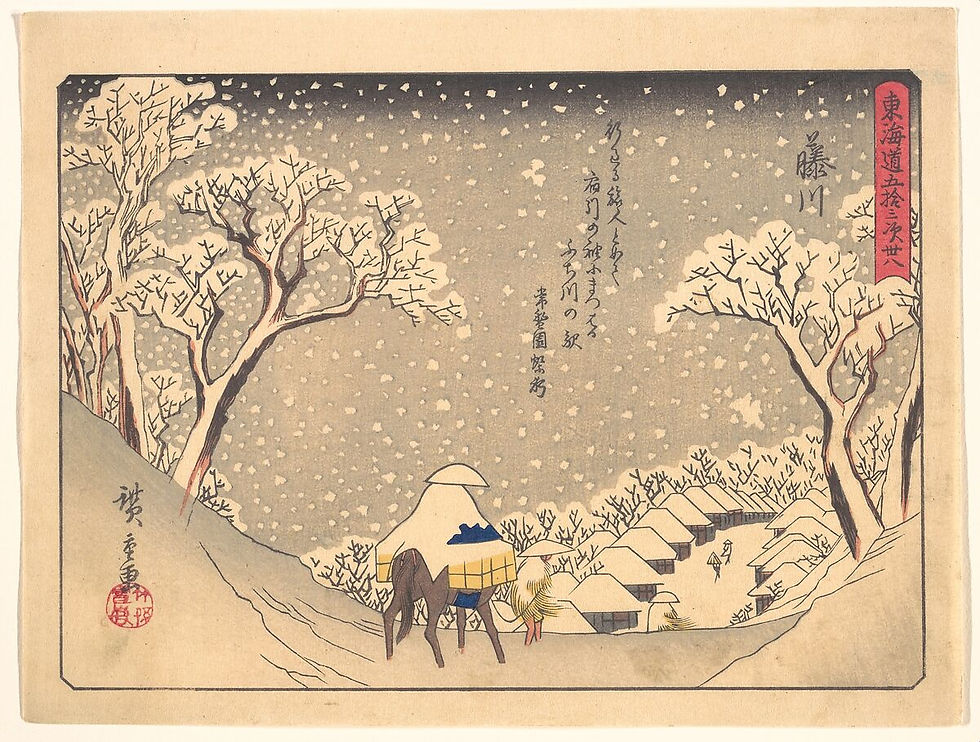
Hiroshige also had a remarkable ability to portray weather. Rain, snow, fog, moonlight, and sunlight became important characters within his artwork. His prints often evoke a specific feeling rather than merely documenting a location. This emphasis on atmosphere helped distinguish his work from that of many earlier landscape artists.
Hiroshige's Artistic Innovations
Although Hiroshige worked within established ukiyo-e traditions, he introduced several innovations that transformed Japanese printmaking: the ability to depict changing weather conditions realistically, the use of dramatic angles and elevated perspectives to guide the viewer's eye through the image, the inclusion of everyday people to bring the landscapes to life, and the emphasis on the balance between landscape and humanity.
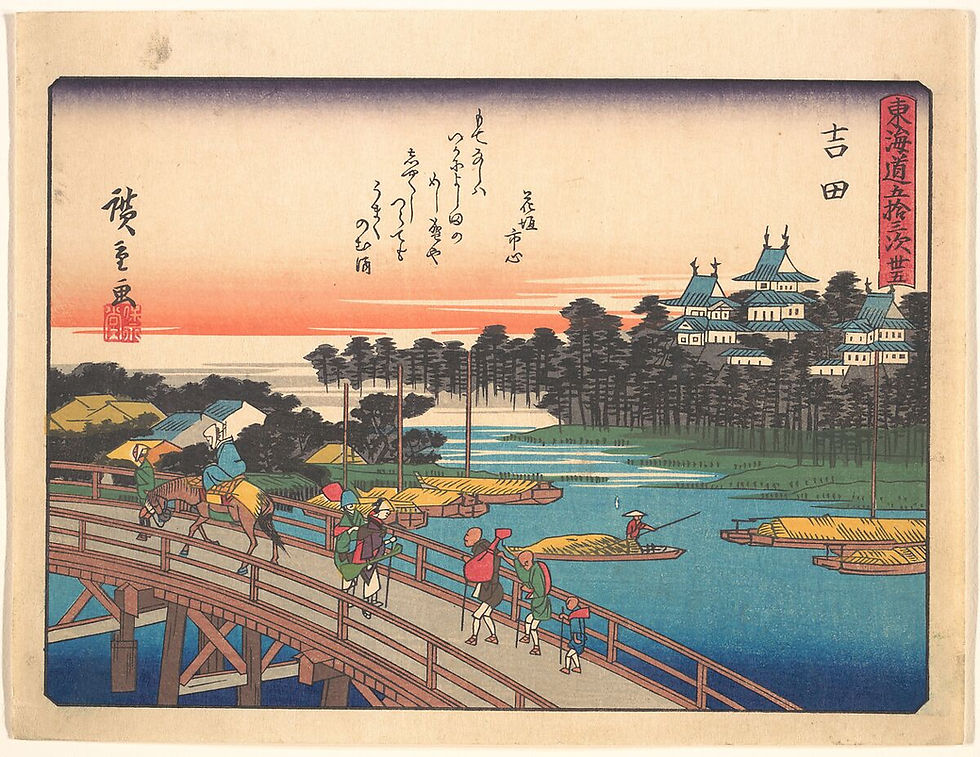
Hiroshige's most famous achievement is his landmark print series The Fifty-Three Stations of the Tōkaidō. Published beginning in the late 1830s, the series depicts the famous Tōkaidō Road, the principal highway connecting Edo (Tokyo) and Kyoto during the Edo period. The route stretched hundreds of miles and served as one of Japan's most important transportation corridors.
Travelers used the road for commerce, government business, religious pilgrimages, and personal journeys. Along the route were fifty-three official post stations where travelers could rest, eat, and obtain lodging. Hiroshige traveled the road himself as part of an official delegation and used the experience as inspiration for the series, and as soon as I learned that, I knew it would make a great backdrop for a murder mystery.
The prints are much more than illustrations of specific locations, however. Hiroshige transformed each station into a vivid story. Some scenes show bustling villages filled with merchants and travelers. Others depict quiet mountain paths, river crossings, and remote countryside inns. Seasonal changes play a major role throughout the series, creating a sense of movement and progression along the journey.
The collection allows viewers to experience the road almost as if they were traveling it themselves, which is why I incorporated as many of the details as I could into my narrative story line. Hiroshige's prints allowed people to experience that adventure visually, even if they never left home.
The series became a tremendous commercial success and remains one of the most celebrated achievements in the history of Japanese art.

A Lasting Legacy
Hiroshige's impact extended far beyond Japan. In the late nineteenth century, Japanese prints began reaching Europe and inspired many Western artists. This fascination with Japanese art became known as Japonisme.
Artists such as Vincent van Gogh, Claude Monet, and James McNeill Whistler admired Hiroshige's work. They borrowed ideas from his compositions, color choices, and unconventional perspectives.
Van Gogh was particularly influenced by Hiroshige and even created painted copies of several Japanese prints while studying their design techniques. Through these artists, Hiroshige helped shape the development of modern Western art.
Today, Hiroshige is remembered as one of the greatest masters of landscape art. His prints continue to captivate viewers because they celebrate both the beauty of nature and the experiences of ordinary people.
Learn more about my historical mystery, The Three Deaths of Hiroshige.


Comments