Dorothy L. Sayers: Mysteries With Depth


Those of us who love classic murder mysteries usually love detective novelist Dorothy L. Sayers and her favorite amateur sleuth, Lord Peter Wimsey. Alongside Agatha Christie, Margery Allingham, and other celebrated crime writers of the 1920s and 1930s, Sayers helped transform the murder mystery into an ingenious intellectual game.
What I didn’t realize until I did some research was that her novels offer something more than clever clues and surprising solutions. They are filled with memorable characters, sharp observations about British society, and increasingly sophisticated explorations of love, work, morality, and personal responsibility.
This post contains Amazon Associate affiliate links. When you purchase any of these books by using these links, I earn a small commission at no extra cost to you.
A Multitude of Talents
Dorothy Leigh Sayers was born in Oxford, England, on June 13, 1893, the daughter of an Anglican clergyman. Exceptionally well educated for a woman of her generation, she won a scholarship to Somerville College, Oxford, in 1912 and studied modern languages, earning first-class honors in French. Women were not yet permitted to receive Oxford degrees when she completed her studies, but when the university finally began granting degrees to women in 1920, Sayers was among those who formally received one.
After Oxford, Sayers worked in publishing and teaching before finding employment as a copywriter at a London advertising agency. Her experience in the competitive world of advertising would later provide the setting and insider detail for Murder Must Advertise. At the same time, she was building a second career as a mystery novelist. Her first Lord Peter Wimsey novel, Whose Body?, appeared in 1923.
Sayers eventually became known as one of the leading figures of Britain's Golden Age of detective fiction, but mysteries represented only one part of her remarkable career. She was also a poet, playwright, essayist, literary critic, scholar, and Christian thinker. In her later years, she largely left detective fiction behind and devoted herself to theological writing, drama, and an ambitious translation of Dante's Divine Comedy.
The Dorothy L. Sayers Style of Mystery
At the center of her mysteries is Lord Peter Wimsey, an aristocratic amateur detective who initially appears to be a charming, monocle-wearing man-about-town with an enthusiasm for rare books, fine wine, and solving murders. Over the course of the series, however, both Wimsey and Sayers's novels become considerably more complex. By the time she introduces the Harriet Vane character, Sayers has begun stretching the traditional detective novel into something approaching a novel of manners—and sometimes even a love story—without abandoning the pleasures of a good mystery.
But Sayers was never content simply to construct puzzles. As the Wimsey series progressed and her characterization of Lord Peter evolved, she became increasingly interested in why people commit crimes and what those crimes reveal about character. Murder might emerge from greed or jealousy, but it might also involve intellectual pride, social pressure, frustrated ambition, romantic obsession, or a desperate desire to protect one's reputation.
Given the growing depth and sophistication of the series over time, I wondered how readers then and now feel about the 11 novels completed by Sayers herself. As it turns out, my informal poll of her fans reveal that most readers praise the same handful of installments, running the gamut from the first novel through the last.
The Best of the Lord Peter Wimsey Series
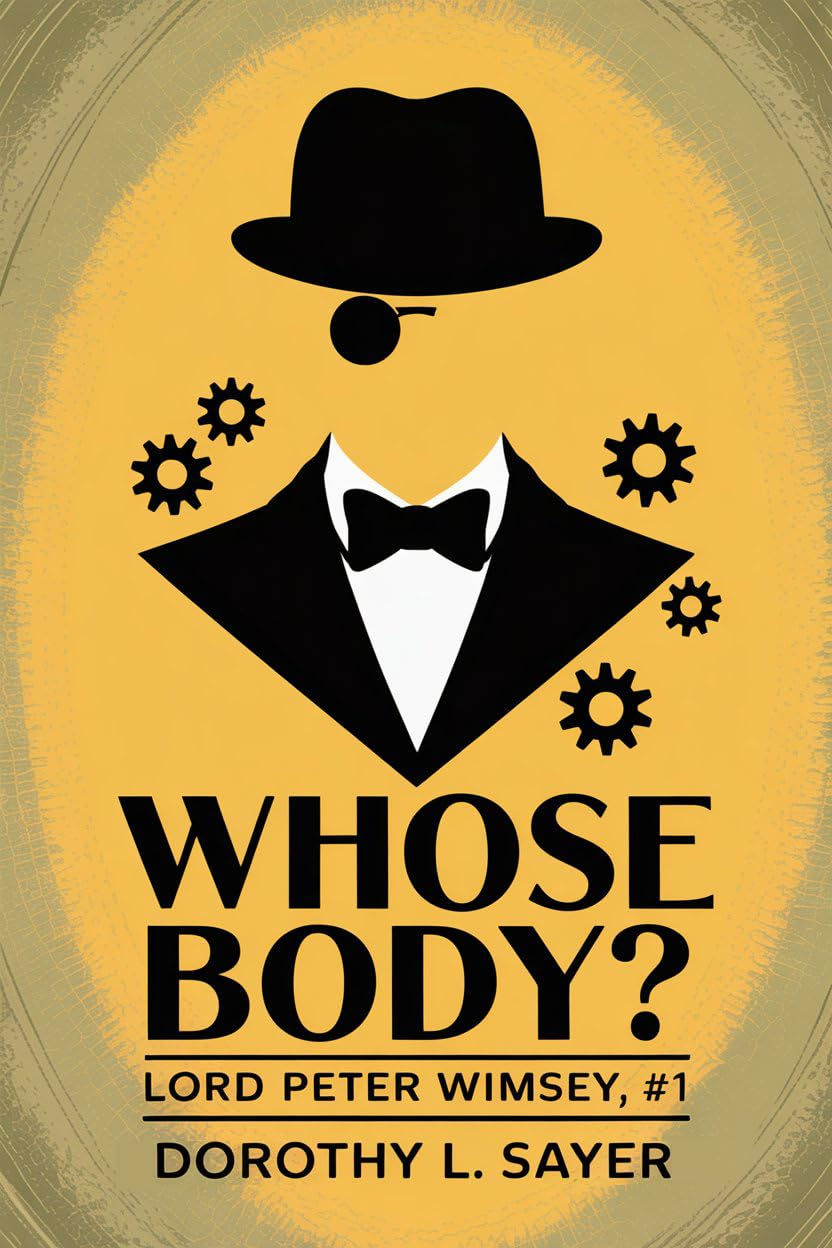
Sayers introduces Lord Peter Wimsey with a wonderfully bizarre problem: an unidentified man has been discovered dead in a bathtub, wearing nothing but a pair of pince-nez. At the same time, a prominent financier has mysteriously disappeared, and the police naturally wonder whether the two cases are connected. Wimsey, assisted by his extraordinarily capable valet Bunter and his friend Detective Inspector Charles Parker, begins investigating and discovers a crime far more calculated than it initially appears. Published in 1923, Whose Body? establishes the mixture of eccentric humor, elaborate detection, and darker psychological undercurrents that would characterize the series.
When a copywriter at Pym's Publicity falls to his death down a spiral staircase, Lord Peter goes undercover at the advertising agency to discover whether the death was really an accident. Posing as the unassuming new employee Death Bredon, Peter finds himself immersed in office politics, advertising campaigns, eccentric coworkers—and evidence of something considerably more sinister operating behind the scenes. Drawing upon Sayers's own years in advertising, the novel is both an entertaining murder mystery and a wonderfully sharp portrait of the industry, making the workplace itself nearly as fascinating as the crime. Sayers's years at S.H. Benson provided firsthand knowledge of precisely this world.

Mystery novelist Harriet Vane returns to her former Oxford college for a reunion, hoping to put some painful memories behind her. Instead, Shrewsbury College is being terrorized by anonymous letters, obscene messages, vandalism, and increasingly disturbing acts of intimidation. Harriet initially attempts to uncover the culprit herself before calling upon Lord Peter for help, but the investigation forces her to confront larger questions about intellectual honesty, women's independence, meaningful work—and her own feelings for Peter. Sayers based the fictional Shrewsbury College partly on her own Somerville College, making the novel deeply personal as well as one of her most thoughtful works.

Mystery writer Harriet Vane is on trial for murdering her former lover with arsenic, and nearly everyone seems convinced of her guilt—except Lord Peter Wimsey. After seeing Harriet in court, Peter becomes equally convinced that she is innocent and that he intends to marry her, although Harriet herself has rather more immediate concerns. When the jury fails to reach a verdict, Peter has only a short time before the retrial to discover how the real murderer committed an apparently impossible poisoning. The novel introduces Harriet, one of Sayers's finest characters, and begins the unusual courtship that becomes one of the emotional threads running through the later Wimsey books.
After a car accident strands Lord Peter and Bunter in a small village in the English Fens, Peter helps the local church's bell ringers complete an elaborate New Year's peal. Months later, he is drawn back to the village when an unidentified body is discovered in a grave that has been opened for another burial. The mystery involves a long-ago jewel theft, hidden identities, old secrets, and the extraordinary world of English change ringing. Atmospheric and intricately constructed, The Nine Tailors is one of Sayers's most distinctive mysteries, using the bells, landscape, weather, and isolated community to create an almost haunting sense of place.
A Mystery Writer Who Wanted More from the Mystery
Dorothy L. Sayers occupies a fascinating place in the history of detective fiction. She understood exactly why readers loved a traditional whodunit—the clues, suspects, alibis, deductions, and exhilarating moment when everything finally falls into place. She could devise an elaborate puzzle with the best of her Golden Age contemporaries.
But she also kept pushing the boundaries of the form.
Over the course of the Lord Peter Wimsey novels, her characters become deeper, the moral questions more complicated, and the worlds surrounding the crimes increasingly important. And then there are Peter and Harriet. Their relationship gives the later novels something unusual in classic detective fiction: a continuing emotional story in which love is not simply a reward waiting for the detective once the mystery is solved. Sayers makes it another puzzle—one requiring honesty, patience, compromise, and mutual respect.
That combination of intellectual mystery, vivid social observation, wit, atmosphere, and emotional depth helps explain why Lord Peter Wimsey remains such an enduring figure of Golden Age crime fiction—and why Dorothy L. Sayers remains far more than simply another writer of clever whodunits.
Are you a Sayers fan? Which of her books is your favorite, and why?


Comments